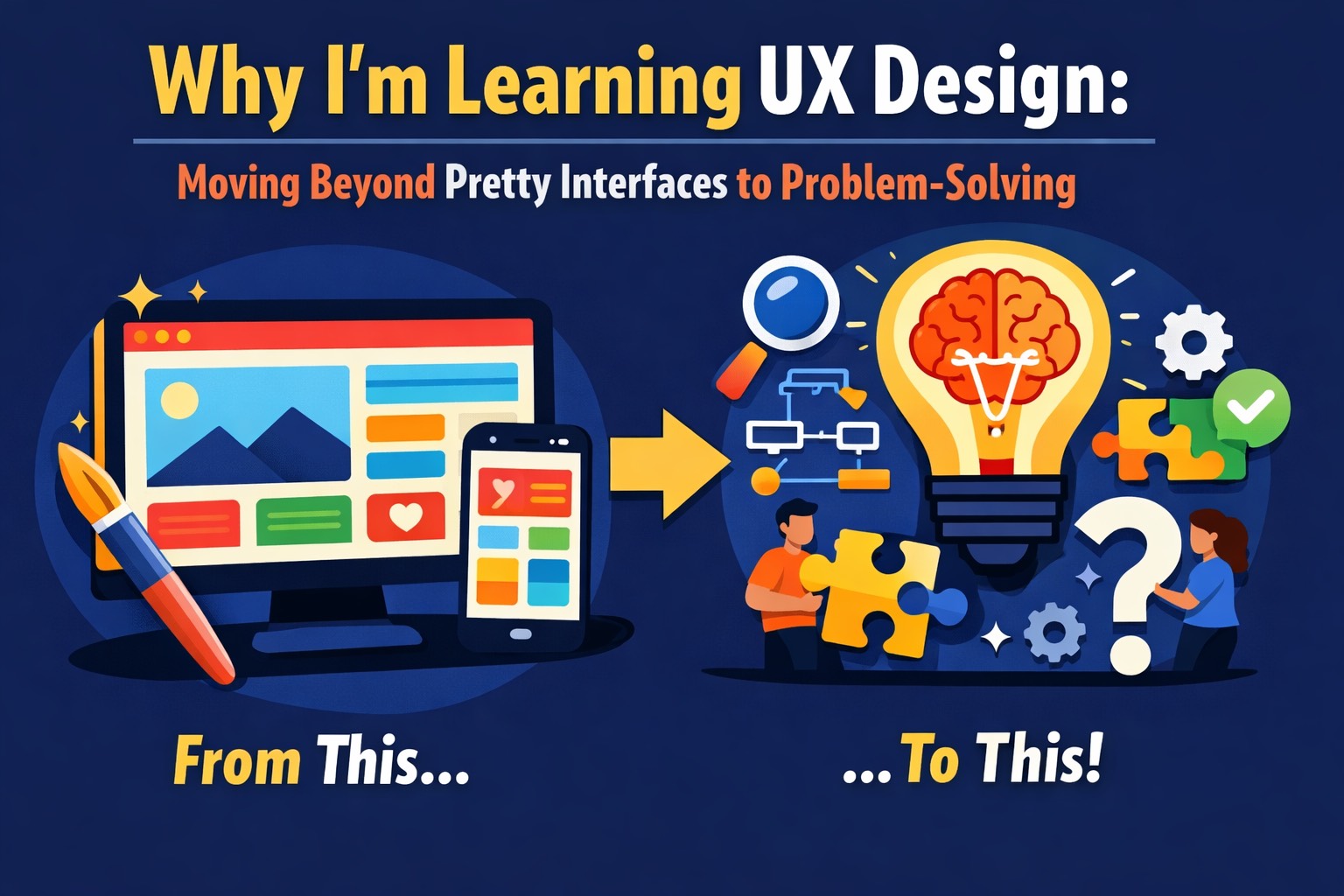
There was a time when I genuinely believed that making something look stunning was enough. If the colours popped, the fonts were clean, and the layout felt modern, I thought that was the whole job done. Turns out, I was only looking at the surface of something much deeper. And honestly, realising that was one of the best wake-up calls of my learning journey.
The Moment Everything Shifted
It started on a Tuesday evening. Nothing dramatic, no big event. I was trying to complete a simple online signup form for a service I actually wanted to use. The page looked gorgeous — soft gradients, sleek typography, the whole works. But twenty minutes later, I was still stuck, frustrated, and close to giving up entirely.
That’s when it hit me. The product looked great, but it completely failed me as a user. Something inside me clicked. I started wondering — who actually thought about my experience when building this? And more importantly, why didn’t it feel like anyone did?
That question is what pulled me toward UX design.
Why Pretty Isn’t Enough
Don’t get me wrong. A well-designed interface matters. It builds trust. It grabs attention. It tells users that someone cared enough to put effort into the product. But here’s the thing nobody tells you at the start — a beautiful interface that confuses people is essentially a beautiful dead end.
I started noticing this pattern everywhere after that frustrating signup experience. Gorgeous apps that buried the most important features three taps deep. Stunning e-commerce sites where checkout felt like navigating a maze. Beautifully branded products that made me feel stupid for not understanding how to use them.
Pretty interfaces attract people. Thoughtful ones keep them.
The Real Pull Toward Problem-Solving
What drew me into UX design wasn’t the aesthetics — it was the puzzle of it all. I’ve always been someone who asks “why” before “how.” Why did that user give up halfway through? Why does this app feel effortless while that one drains my patience? Why do some products make people smile while others make them sigh?
UX design gave me a structured way to chase those answers. It’s less about drawing beautiful screens and more about deeply understanding people — what they need, what frustrates them, and how they actually behave when no one is watching. That fascination is what kept me going even on the days when learning felt slow and overwhelming.
What I’m Actually Learning
When I first Googled “how to learn UX design,” I expected tutorials about colour theory and layout grids. Instead, I found myself reading about psychology, user research, empathy mapping, and information architecture. It was humbling, honestly. I quickly realised UX is far wider than I ever imagined.
Become a Medium member
Right now, I’m focusing on a few things that have genuinely changed how I think. User research taught me to stop guessing and start listening. Wireframing taught me to solve problems on paper before jumping into polished tools. Usability testing taught me that my assumptions about how people use products are almost always wrong.
Every single lesson has been a reminder of one thing — real design starts with understanding people, not impressing them.
The Uncomfortable Truth I Had to Accept
Here’s something that took me a while to sit with. Learning UX design means accepting that your ego has to take a back seat. You might spend hours crafting something you personally love, only to watch a real user struggle with it completely. That stings. There’s no way around it.
But that’s also what makes it meaningful. The moment you stop designing for yourself and start designing for someone else — someone with different habits, different frustrations, different expectations — that’s when you start doing real work. That shift from “look what I made” to “does this actually help someone?” is the core of what UX design taught me.
Why This Matters Beyond Design
What surprised me most is how transferable these skills are. Problem-solving, empathy, critical thinking, testing assumptions — these aren’t just design skills. They’re life skills. They apply to communication, business, relationships, and pretty much anything that involves understanding another person.
Learning UX design didn’t just add something to my resume. It changed the way I think about the world around me. I see friction differently now. I notice where systems fail people. I pay attention to the small details that either make an experience feel seamless or quietly frustrating.
Where I’m Headed
I won’t pretend I have it all figured out. Some days I feel like I’m just scratching the surface, and the depth of what there is to learn is genuinely daunting. But that’s what keeps me curious. Every project, every mistake, every conversation with a potential user teaches me something new about what it means to design with intention.
I’m not learning UX design to make prettier apps. I’m learning it because I want to solve real problems for real people. Because at the end of the day, the best design isn’t the one that wins awards — it’s the one that makes someone’s life just a little bit easier without them ever noticing the effort behind it.
The Bottom Line
If you’re considering learning UX design, here’s my honest advice — don’t start with tools. Start with curiosity. Pay attention to the products that frustrate you and the ones that delight you. Ask yourself why. That’s where the real learning begins.
Because moving beyond pretty interfaces isn’t just a design philosophy. It’s a mindset shift. And trust me, once it happens, you can never go back to thinking about design the same way again.
UX Design
Why I’m Learning UX Design: Moving Beyond Pretty Interfaces to Problem-Solving
In this article
There was a time when I genuinely believed that making something look stunning was enough. If the colours popped, the fonts were clean, and the layout felt...